



Imagine recording your voice once and then generating new voiceovers without having to speak every line yourself. That is what AI voice cloning makes possible.
AI voice cloning uses artificial intelligence to analyze a voice recording and recreate characteristics such as its tone, pitch, rhythm, and speaking style. Once the voice is cloned, you can type new text and an AI voice generator can turn it into speech using that voice.
But how does AI voice cloning actually work? Here is a simple breakdown.
What Is AI Voice Cloning?
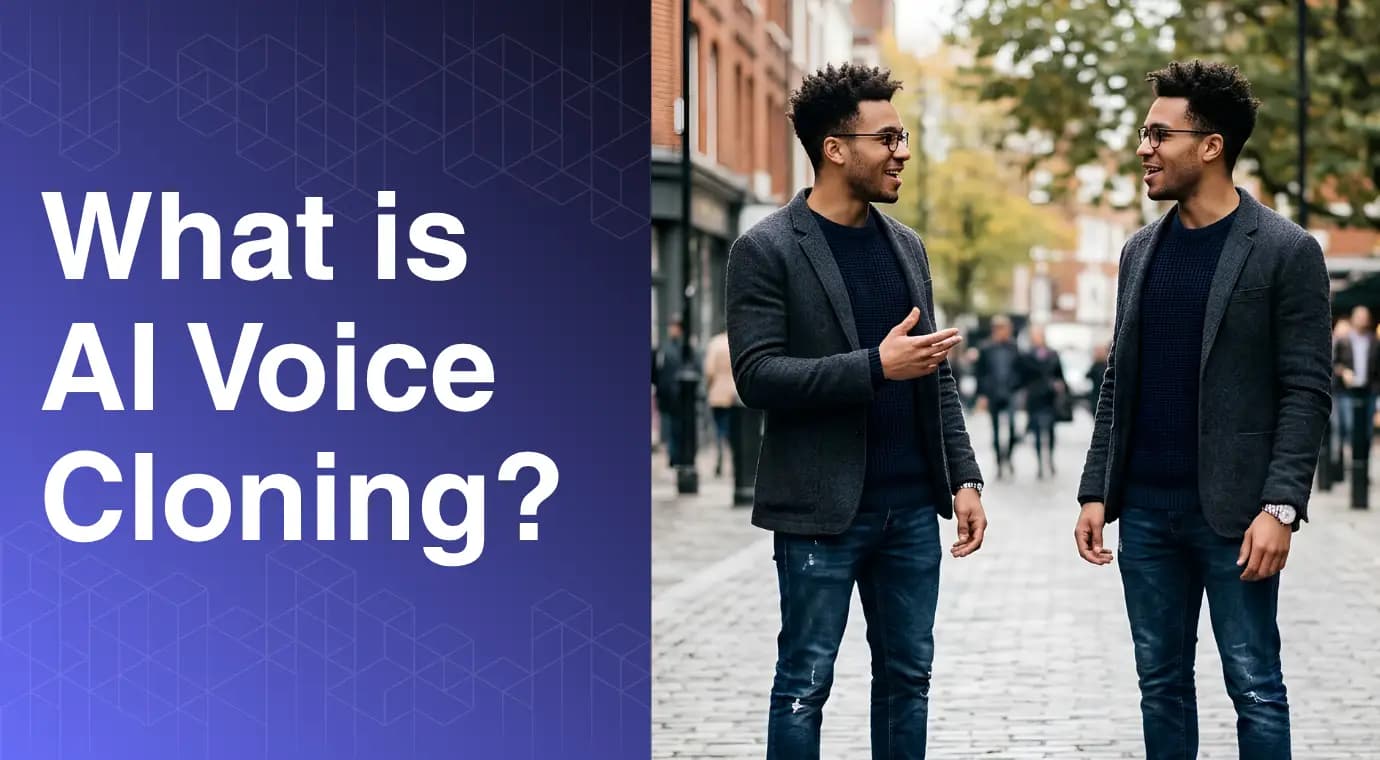
AI voice cloning is the process of creating a digital version of a person's voice using artificial intelligence.
You provide a recording of your voice, and the AI analyzes the characteristics that make it unique. Once the voice has been cloned, you can enter completely new text and generate speech without recording that sentence yourself.
For example, you could provide a short recording saying:
Then enter completely different text:
The AI can generate the new sentence using characteristics learned from your original voice.
How Does AI Voice Cloning Work?
Although the technology behind AI voice cloning is complex, the process for the user is surprisingly simple.
1. Record Your Voice
First, you provide a reference recording. For the best results, the recording should have clear speech, minimal background noise, no music, and a natural speaking style.
Some modern voice-cloning models can work with very short reference recordings, although results depend on the model and audio quality.
2. AI Analyzes Your Voice
The AI analyzes characteristics such as:
- Pitch and tone
- Speaking rhythm
- Pronunciation
- Vocal texture
- Pacing and pauses
It then creates a mathematical representation of the speaker's vocal characteristics.
3. Enter Your Text
Once the voice is ready, you simply enter whatever you want it to say. For example:
4. Generate the Audio
The AI text-to-speech model combines your text with the characteristics of the cloned voice and generates new speech.
- Voice sample
- AI analysis
- Voice clone
- Enter text
- Generate audio
And that is it.
AI Voice Cloning vs. Text-to-Speech
Although they are often mentioned together, voice cloning and text-to-speech are not exactly the same.
Traditional text-to-speech (TTS) uses existing AI voices:
- Text
- AI voice
- Audio
Voice cloning allows the system to use characteristics learned from a specific voice:
- Voice sample
- Voice clone
- Text
- Audio
In practice, voice cloning and text-to-speech often work together. The cloning technology creates the voice representation, while the TTS model generates speech from your text.
What Can AI Voice Cloning Be Used For?
One of the biggest reasons AI voice cloning technology is growing quickly is its flexibility.
- YouTube videos: Creators can generate narration for tutorials, educational videos, explainers, Shorts, and other recurring content without recording every script manually.
- Podcasts: Podcasters can use an authorized voice clone for intros, corrections, updates, or other production tasks without setting up their microphone again for every small change.
- Audiobooks: AI-generated speech can help creators experiment with audiobook narration, previews, and long-form content.
- Online courses: Course creators can generate narration for lessons, presentations, and tutorials—and easily update audio when course material changes.
- Product demos: Businesses can quickly update voiceovers when a feature, interface, or workflow changes.
How Much Audio Do You Need to Clone a Voice?
It depends on the AI model. Some modern AI voice cloning tools can work with short audio samples, while others benefit from longer recordings. More important than duration, however, is audio quality.
For better voice-cloning results:
- Record somewhere quiet
- Avoid background music
- Minimize echo
- Speak naturally
- Keep your microphone distance consistent
A short, clean recording can be more useful than a long recording filled with noise.
Is AI Voice Cloning Accurate?
Modern AI voice cloning can produce highly natural results, but quality depends on several factors. These include the reference recording, AI model, language, accent, input text, and speaking style.
Names, abbreviations, technical terminology, or unusual words may occasionally require adjustment. For this reason, it is always a good idea to listen to generated audio before publishing it.
Is AI Voice Cloning Safe?
AI voice cloning has many legitimate uses, but it should be used responsibly. You should generally only clone:
- Your own voice
- A voice you have permission to use
- A voice you are otherwise authorized to use
Voice cloning should not be used to impersonate someone, deceive people, commit fraud, or falsely represent what another person said. As AI-generated voices become more realistic, consent and responsible use become increasingly important.
Why Use Pay-As-You-Go AI Voice Generation?
Many AI voice generators require monthly subscriptions. That works for people producing audio every day—but not everyone needs AI voice generation that often. You might create five videos this month and none next month.
With a pay-as-you-go AI voice generator, you purchase usage when you actually need it rather than paying another recurring subscription. That is the approach behind Voxly Labs: generate when you need it and pay for what you use.
Create Your Own AI Voice
AI voice cloning makes it possible to turn a short voice recording into a reusable AI voice that can generate completely new speech from text.
For creators, it can mean fewer recording sessions. For businesses, it can make updating voiceovers easier. And for occasional users, it can provide a faster way to generate audio without committing to another monthly subscription.